
Brait Targets Virgin Active Exit Within Two Years, Launches R2.5 Billion Rights Offer to Get There
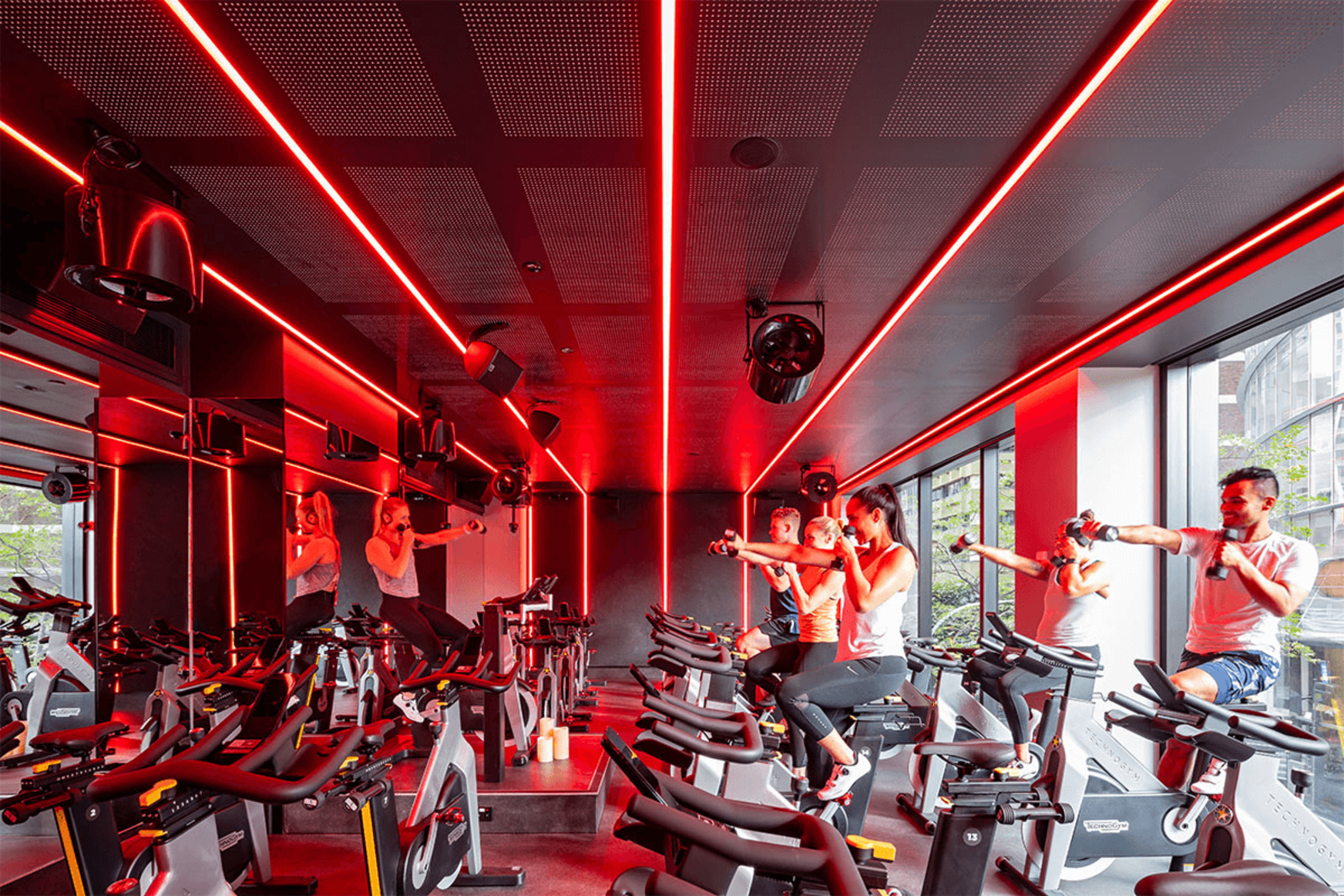
Image by Virgin Active
Brait SE, the investment holding company whose largest shareholder is South African billionaire Christo Wiese, is preparing Virgin Active for a public listing or sale, anchoring the plan with a R2.5 billion ($147 million) rights offer announced alongside its audited results for the year through March 2026, and released June 18.
In its results statement, Brait said growth from new gyms and its refurbishment program will position Virgin Active for an exit within the next two years - a window that reporting has placed at the second half of 2027 or the first half of 2028, pushed back from earlier guidance that pointed to late 2026. Brait CEO Peter Hayward-Butt has previously indicated a listing is most likely in the UK, with a secondary offer in Johannesburg.
Brait's stake in Virgin Active is valued at R9.39 billion ($551 million), representing 54 percent of the group's total assets. The rights offer is priced at R1.51 per share - a 25 percent discount to the theoretical ex-rights price and a 43 percent discount to Brait's net asset value per share once the offer completes. Wiese is backstopping the raise himself: his investment vehicle Titan and its affiliates, which hold 39.3 percent of Brait's shares, have irrevocably undertaken to underwrite the full R2.5 billion. Shareholders vote at an extraordinary general meeting on July 16, with the offer expected to open July 27 and close August 7.
The Balance Sheet Comes First
Before any listing, Virgin Active must deleverage. The gym operator is raising £175 million from existing shareholders, with Brait contributing £108 million to cover its pro-rata share. The capital raise is designed to bring Virgin Active's net debt-to-EBITDA ratio down from 3.7 times to 2.0 times and fund the company's club refurbishment program and new club rollout strategy.
The deal also cleans up the capital structure. Virgin Active is converting £70 million of its £80.4 million in convertible preference shares into equity, with the balance redeemed for cash - a move that reduces Brait's stake from 67.7 percent to 61.3 percent. Combined with a refinancing of its South African and international facilities on more competitive terms, the transactions will save Virgin Active £21.5 million in annual interest costs.
The business heading into this process is performing: Virgin Active grew EBITDA 37 percent year-over-year, with strong contributions from every territory except Australia.
The push sits inside a broader debt-reduction strategy Brait has pursued since March 2020, when its net debt stood at R7 billion. That figure has since fallen to R1.7 billion, driven by asset disposals and the listing and monetization of its stake in food producer Premier.
A South African Asset Heading to Global Markets
Virgin Active's South African roots run deep. Wiese acquired the business from Richard Branson's Virgin Group in 2015, but the brand's origin story on the continent predates that by two decades - Nelson Mandela personally called Branson in the late 1990s to ask whether Virgin could rescue the struggling Health & Racquet Club chain, the deal that became Virgin Active South Africa.
Today, Virgin Active South Africa operates a network of more than 120 clubs across South Africa, Botswana and Namibia, making it the continent's largest health-and-wellness operator. The African business is no side show in the group's numbers: Southern Africa accounts for 35 percent of Virgin Active's global revenue - its largest territory, ahead of Italy (27 percent) and the UK (24 percent) - with 623,000 active members as of March 2026. Southern African revenue rose 6 percent year-over-year, driven by yield increases as clubs are refurbished and strong sales at higher-end locations, though Brait flagged elevated membership churn, attributing it partly to refurbishment closures and ongoing consumer affordability pressure.
A successful listing would create something African sports business has in short supply: a publicly traded, institutionally scaled fitness asset with African operations at its core, and a Johannesburg secondary offer would put a piece of it within reach of domestic capital.
Premium Repositioning Ahead of the Exit
The listing preparation is running in parallel with an aggressive brand repositioning. In February, Branson opened Virgin Active South Africa's first Collection Country Club in Green Point, Cape Town - a R100 million-plus, 5,500-square-meter redevelopment that combines training, recovery, nutrition, health services, co-working and community space under a "social wellness club" model. The concept is the template for a national upgrade program running through 2026, with the format also rolling out internationally in Qatar, the UK, Italy and Austria.
The commercial layer is sport. Virgin Active is now the official title sponsor of HYROX in South Africa, with all 128 of its clubs designated official HYROX affiliate partners. Virgin Active HYROX events have anchored the fitness racing series' African expansion, with Cape Town hosting the continent's first race and Johannesburg's Expo Centre set to host its second event of 2026 in late November.
Image by Virgin Active
The strategy reads as a revenue-per-member play ahead of the IPO window: shift the brand upmarket, attach it to the fastest-growing property in global fitness, and present public investors with a wellness platform rather than a gym chain.
The Competitive Backdrop
The repositioning comes as Virgin Active cedes ground at the value end of the market. The operator has closed clubs in Soweto, Midrand and Mbombela amid weak consumer growth, while domestic rival Planet Fitness - the South African chain, unrelated to the US brand - has reached 50 locations and is targeting 75 clubs by 2030, a 50 percent expansion in five years.
The divergence frames the question public investors will eventually price: whether Africa's fitness market rewards premium wellness positioning or value-tier scale. By 2028, there may be a ticker to watch for the answer.
