
How FIFA's $20 Billion Plan to Sell a World Cup Stake May Turn on Africa's Vote
FIFA is exploring a sale of equity in its commercial operations to private investors, a move that could raise as much as $20 billion and has fractured the sport, pitting president Gianni Infantino against European powerhouse UEFA. For African football, the proposal is less a distant governance row than a direct financial windfall - and potentially a lasting shift in who holds power over the game.
Under the plan, FIFA would spin out a new subsidiary, FIFA Forward Enterprise (FFE), to house broadcast, sponsorship, ticketing and licensing rights across its tournament portfolio, including the World Cup. Outside investors would take a stake; FIFA insists it would keep majority board control and final say over sporting matters. The bid on the table comes from Thrive Eternal, a permanent holding company led by venture capitalist Josh Kushner - a structure designed to hold the asset indefinitely rather than flip it within the usual five-to-ten-year private equity window.
The offer to FIFA's 211 member associations is deliberately aggressive: $20 million per association on approval, plus three further payments totalling $66 million through 2038. Set against the roughly $8 million in forward funding most federations receive per cycle, the sums are transformative - and nowhere more so than in Africa.
A tournament that felt like progress
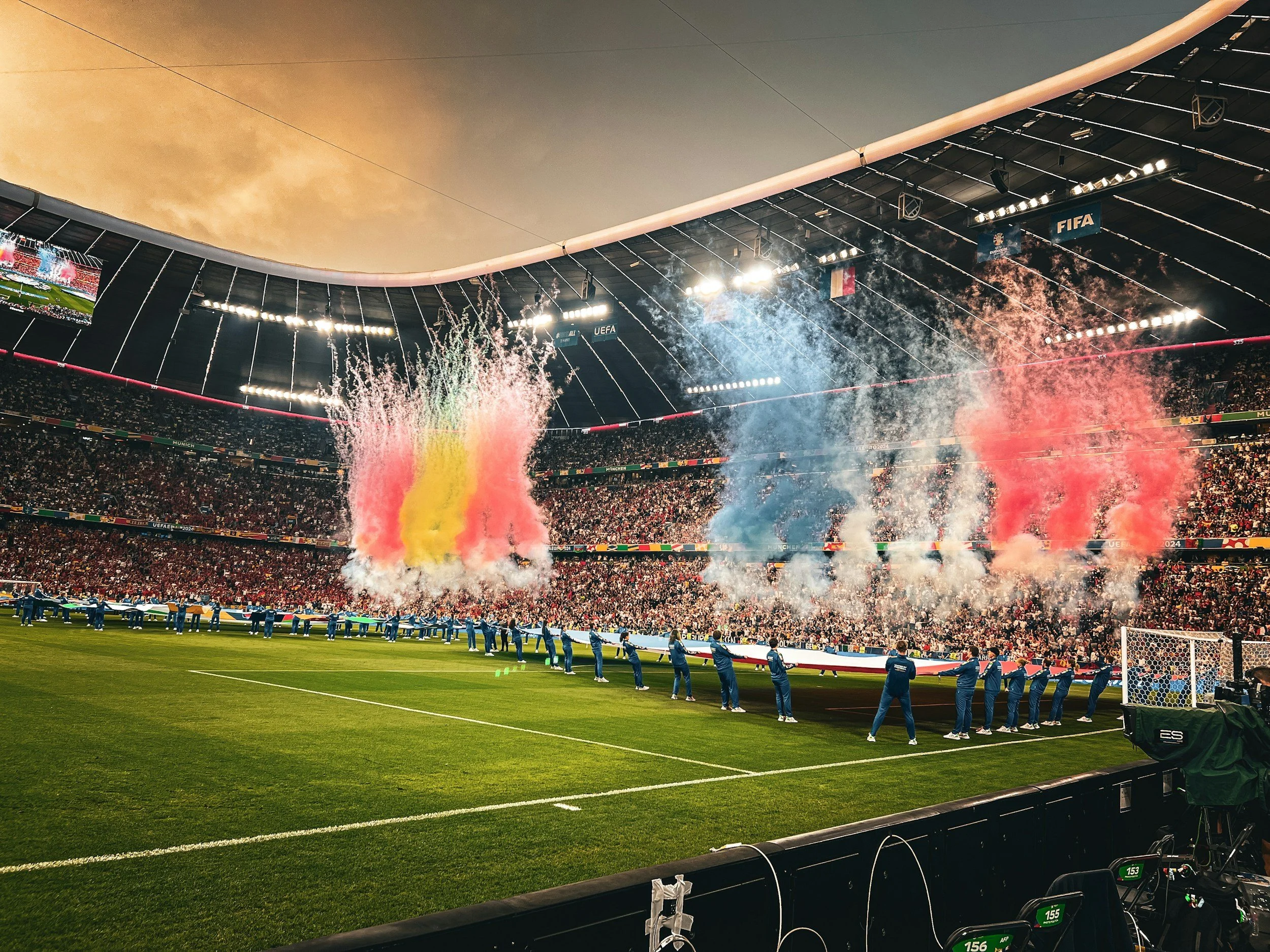
The timing lands awkwardly against the backdrop of the World Cup that just concluded. The 2026 edition was the first staged under the expanded 48-team format, up from 32, and for African football that expansion was tangible progress. CAF's allocation rose to nine direct berths, nearly double its previous five, giving more of the continent's nations a genuine route to the world stage rather than a scramble for a handful of spots. The tournament generated an estimated $15 billion - commercial proof that a bigger, more inclusive World Cup could also be a more lucrative one.
For once, the growth of the game and the interests of its historically underserved regions seemed to be moving in the same direction. More slots, more visibility, more money going outward. The momentum felt real.
That is what makes the FFE proposal disconcerting. Barely weeks after a World Cup that widened the door for African nations, FIFA is proposing to sell influence over the very asset that made the expansion possible - and to do it in a way that hands outside investors, not federations, a say in how the tournament grows from here. The concern is that the logic of inclusion that drove the 48-team model could be quietly replaced by the logic of returns.
Why the maths favours Infantino
FIFA operates on one-member, one-vote, and - according to FIFA's framing of the proposal - it needs only a simple majority to pass. Africa's 54 CAF associations form the second-largest confederation bloc, marginally behind UEFA's 55 and ahead of Asia's 47. But CAF's size in isolation isn't the decisive factor: combined, Africa, Asia and Oceania account for 114 votes, and adding Concacaf's 41 clears the threshold without a single European yes. For federations that struggle to fund youth pipelines, coaching, women's programmes and basic administration, an instant $20 million is a once-in-a-generation cash injection. The incentive to vote yes is obvious.
The CAF calculation
That's precisely why the African vote is decisive, and why it deserves scrutiny. The short-term case writes itself: guaranteed funding that doesn't depend on the commercial pull of European or South American markets. But there are longer questions African administrators will have to weigh.
First, dependency versus development. A lump-sum windfall solves an immediate cash problem, but whether it builds durable infrastructure - pitches, academies, professional leagues, or simply gets absorbed depends entirely on governance at the association level, historically an uneven picture across the continent.
Second, the price of a permanent sale. Handing investors influence over broadcast deals, ticket pricing and potentially the frequency and location of tournaments could work against Africa in the long run. A World Cup optimised for investor returns is more likely to be staged in high-revenue markets like the United States than rotated to the continent, and the appetite to keep expanding access, as the 48-team model did, may cool if it doesn't serve the balance sheet.
Third, leverage. If UEFA follows through on its boycott threat and the tournament splits, CAF nations backing the plan would be tied to a World Cup stripped of Spain, France, England and the rest of Europe - a competition worth a fraction of the current $15 billion cycle. The windfall assumes the asset keeps its value; a fractured World Cup undermines that assumption.
Where it stands
UEFA has come out swinging, warning the sport is "not FIFA's to sell" and floating a boycott, with an emergency meeting of its 55 members this week. Concacaf has voiced "deep concern," and England's FA says it was blindsided. Infantino has set a 19 September deadline.
For CAF and its members, the decision is genuinely consequential. A World Cup that had just started to open up to the continent now sits at the centre of a fight over whether the game belongs to its stakeholders or to its investors. The money is real and the need is real. But so is the risk of trading long-term voice in the game for a short-term cheque, and of being locked into a devalued tournament if the sport splits along confederation lines. Africa holds the deciding hand. The harder question is whether a guaranteed cheque today is worth a permanent say in the game tomorrow.
