
Morocco Awarded AFCON Title - But Who Keeps the $10M Prize Money?

Image: Getty Images & AFP-JIJI
In one of the most consequential rulings in African football history, Morocco have been officially crowned 2025 Africa Cup of Nations (AFCON) champions-weeks after Senegal had celebrated victory on the pitch.
CAF's appeals board determined that Senegal forfeited the final after players left the field in protest during stoppage time, converting what had been a 1–0 extra-time win into a 3–0 default victory for Morocco. The decision, grounded in tournament regulations, resolves the sporting outcome. It does not, however, resolve the economics.
Beyond the controversy, three questions now define the financial fallout:
Does Morocco now receive the full winner's prize money?
Is Senegal required to return funds already distributed?
What happens to player bonuses already paid out?
The answer to each is far from simple.
The Financial Stakes
At the centre of the controversy is a $6 million financial gap. Senegal, as initial winners, were entitled to $10 million in prize money, while Morocco, as runners-up, were allocated $4 million. With the result now overturned, the financial logic appears straightforward - Morocco should receive the winner's prize, and Senegal should revert to the runner-up allocation. That raises a more complicated question: Is Senegal required to return the $6 million difference?
Prize money in AFCON is not merely symbolic. For national federations, it represents a meaningful source of funding that supports operations, player compensation, and development initiatives. It is also deeply embedded in a broader commercial ecosystem. Player bonuses are often tied directly to tournament outcomes, sponsorship agreements can include performance-based incentives, and national celebrations frequently trigger additional commercial activity. By the time a final whistle is blown, financial flows are already in motion.
With CAF's ruling, this is where the distinction between regulatory clarity and financial reality becomes critical. CAF's ruling is rooted in established competition rules: a team that refuses to continue play forfeits the match. But reversing a sporting result is far simpler than unwinding its financial consequences. Prize money may already have been distributed. Player bonuses may have been contractually locked and paid. Sponsorship triggers may have been activated. In many cases, those funds have already been allocated or spent.
Precedent Offers Little Comfort
In global sport, precedents suggest that financial reversals following overturned results are rarely clean or immediate. Instead, they tend to lead to prolonged negotiations, legal disputes, or partial settlements. CAF has not yet clarified how - or if - the financial redistribution will be enforced, leaving a degree of uncertainty that extends beyond the two federations involved.
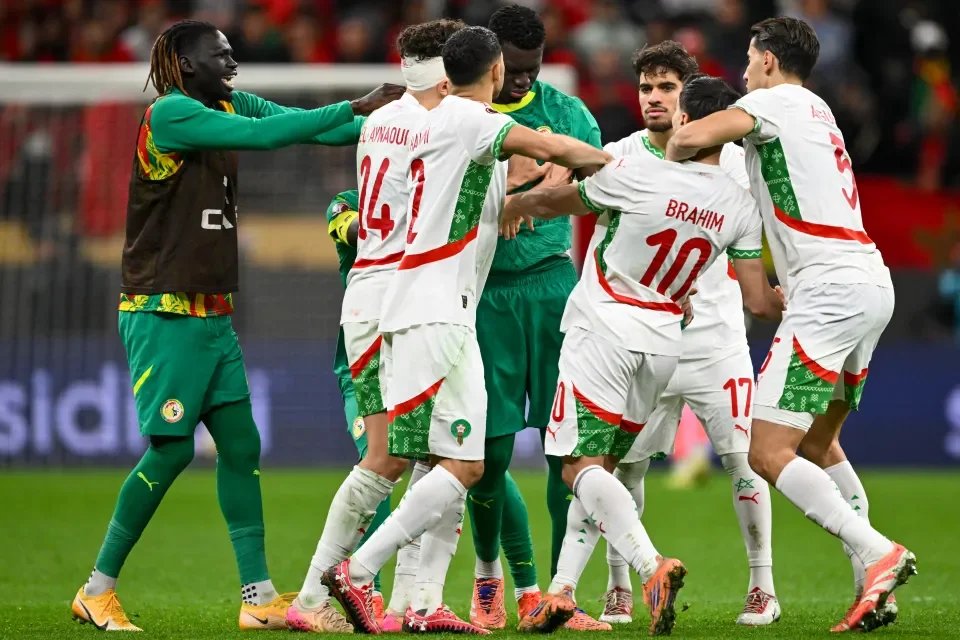
Photo: Talk Sports
Senegal: Financial and Reputational Implications
For Senegal, the implications are both financial and reputational. A requirement to return $6 million would not only affect federation finances, but could also create internal complications around player and staff bonuses. It could strain relationships with sponsors and partners who aligned themselves with a title-winning campaign. More broadly, it introduces the likelihood of legal escalation, with a potential appeal to the Court of Arbitration for Sport (CAS) that could take months - if not longer - to resolve.
Morocco: Commercial Gains Beyond the Trophy
Morocco, by contrast, stands to gain on multiple fronts. The ruling enhances the federation's commercial positioning ahead of the 2026 FIFA World Cup. Champion status carries increased leverage in sponsorship negotiations, greater global visibility, and potentially access to the higher prize allocation. The decision effectively transforms Morocco's outcome from runner-up to champion-not only in sporting terms, but in brand and revenue terms as well.
A Governance Question for African Sport
The broader implications extend beyond this single tournament. AFCON is one of Africa's most valuable sporting properties in the world, attracting growing interest from sponsors, broadcasters, and investors. Incidents of this nature highlight a fundamental risk within that ecosystem: regulatory uncertainty. When competition outcomes can be overturned weeks after the fact, and when financial consequences remain unclear, it raises serious questions about governance, dispute resolution, and the reliability of commercial frameworks.
When dealing with stakeholders across the sport business value chain, clarity is not optional - it is essential. Sponsors need certainty on what they are buying. Broadcasters need confidence in the integrity of competition. Federations need predictable revenue structures. Players need assurance that performance-based incentives are secure.
Until CAF provides definitive guidance on the financial settlement, AFCON 2025 remains unresolved in a critical sense.
Morocco may now hold the trophy. Senegal may still hold the money.
Between those two realities lies a $6 million question - and a deeper truth about modern sport: results determine outcomes, but governance determines value. Join the conversations and take our poll.
