
UNESCO Joins Uganda's Push to Turn AFCON 2027 Hosting Into Long-Term Economic Gain
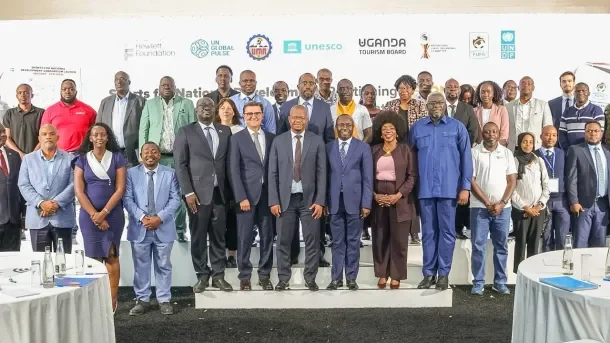
Image by FUFA
Uganda has put a name and a governance structure to what was, until now, a loose set of ambitions for AFCON 2027: cash flow, tourism receipts and long-term infrastructure use. The government, UNESCO, FUFA, the UN Development Programme, UN Global Pulse, the Uganda Tourism Board and the Uganda Manufacturers Association launched the Sports for National Development (SND) Consortium in Kampala on August 6, a multi-stakeholder platform built to turn the country's co-hosting of the TotalEnergies Africa Cup of Nations into something that outlasts the tournament itself.
The launch, held at the Mestil Hotel, drew senior government officials, development partners, private sector representatives, academia, civil society organisations, cultural institutions and members of the AFCON Local Organising Committee.
The consortium runs on five pillars: Data and Analytics, Strengthened Football Ecosystem and Engagement, Strategic Investment Intelligence, Destination Uganda, Legacy and Sustainability, covering everything from evidence generation to tourism promotion and post-tournament facility use. The event closed with a partnership plaque signed by Hon. Peter Ogwang and FUFA's Dr. Azah Taibu.
Minister of State for Sports and CHAN-AFCON Local Organising Committee Co-Chairperson Hon. Peter Ogwang made the commercial case for the government, arguing the tournament's benefits "extend beyond the pitch" into "tourism, employment, investment, infrastructure development and opportunities for local businesses." He called improved hosting capacity the country's "premier legacy benefit," giving Ugandan athletes facilities to train on long after the final.
UNESCO's role sits outside the stadium walls -the agency will lead the consortium's cultural, social and knowledge work, folding Uganda's heritage and creative sectors into AFCON preparations alongside media literacy, social inclusion and youth engagement programming.
H.E. Anton Garcia Alvara, Charge d'Affaires of the European Union to Uganda, drew the comparison to Spain, where football investment "take[s] years" to pay off but has "last[ed] for generations." His point: talent "needs to be nurtured," and AFCON gives Uganda the infrastructure case to start.
FUFA President Hon. Magogo Moses Hassim put the audience argument in numbers: AFCON is "watched in over 150 countries," which he called a chance "to project the country to the world" and, with the right data, "inform development that is catalysed by hosting the AFCON."
Where is the money heading?
The consortium's design tells you where the real money question sits. Putting Data and Analytics first among the five pillars, and bringing in UN Global Pulse specifically, means Uganda wants a case for investors and future hosts built on numbers, not just goodwill. Strategic Investment Intelligence as a standalone pillar makes that explicit: this is a government trying to convert broadcast reach and visitor numbers into a pitch deck for manufacturers, hoteliers and infrastructure financiers, with the Uganda Manufacturers Association's presence at the table a signal of where some of that lobbying will land.
The bigger question is on sequencing. Hosting capacity as the premier legacy benefit puts stadiums, training pitches and hotel stock ahead of the tournament's on-field outcome. Uganda cannot control how its team performs, but it can control whether the facilities, data systems and institutional partnerships built for AFCON 2027 still function in 2030.
