
Morocco Tenders $39.5 Million for Grand Stade Hassan II Pitch and Seating
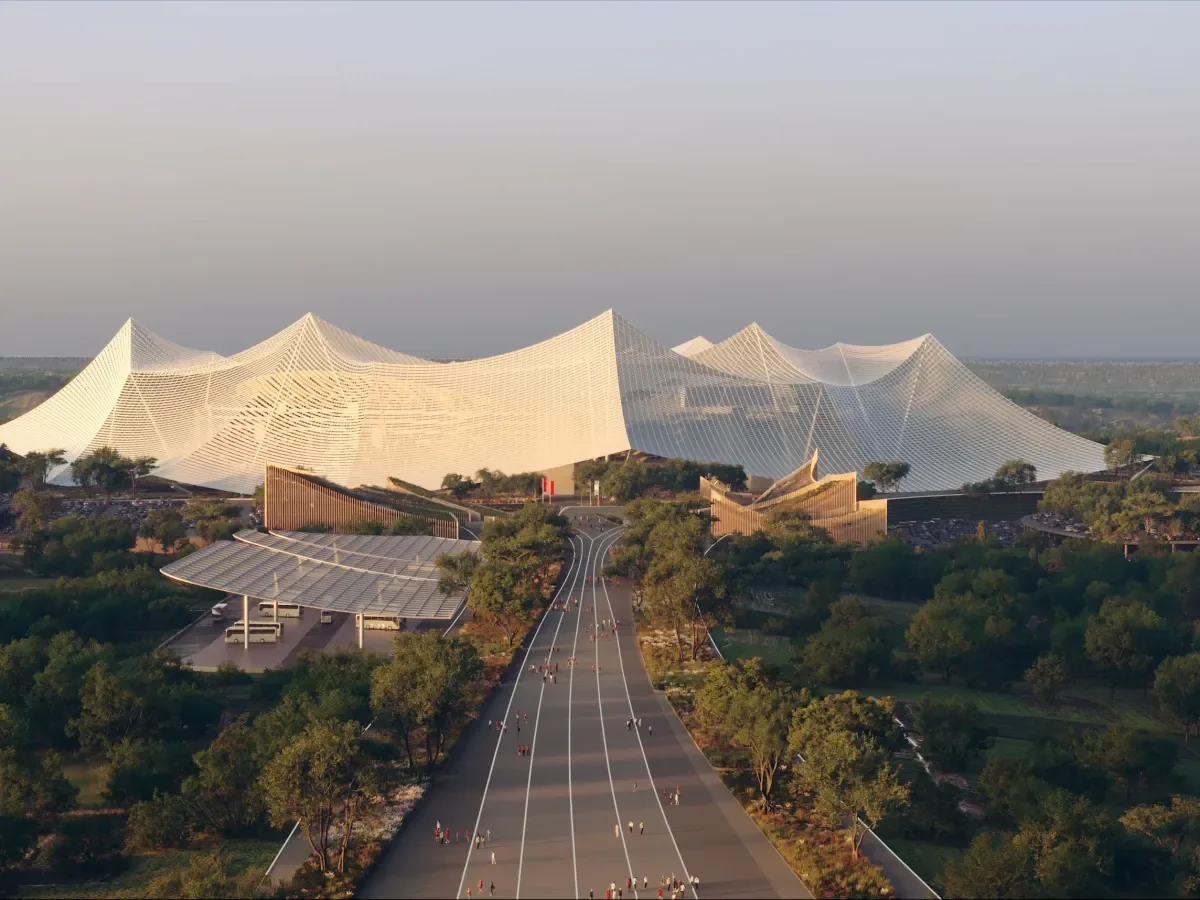
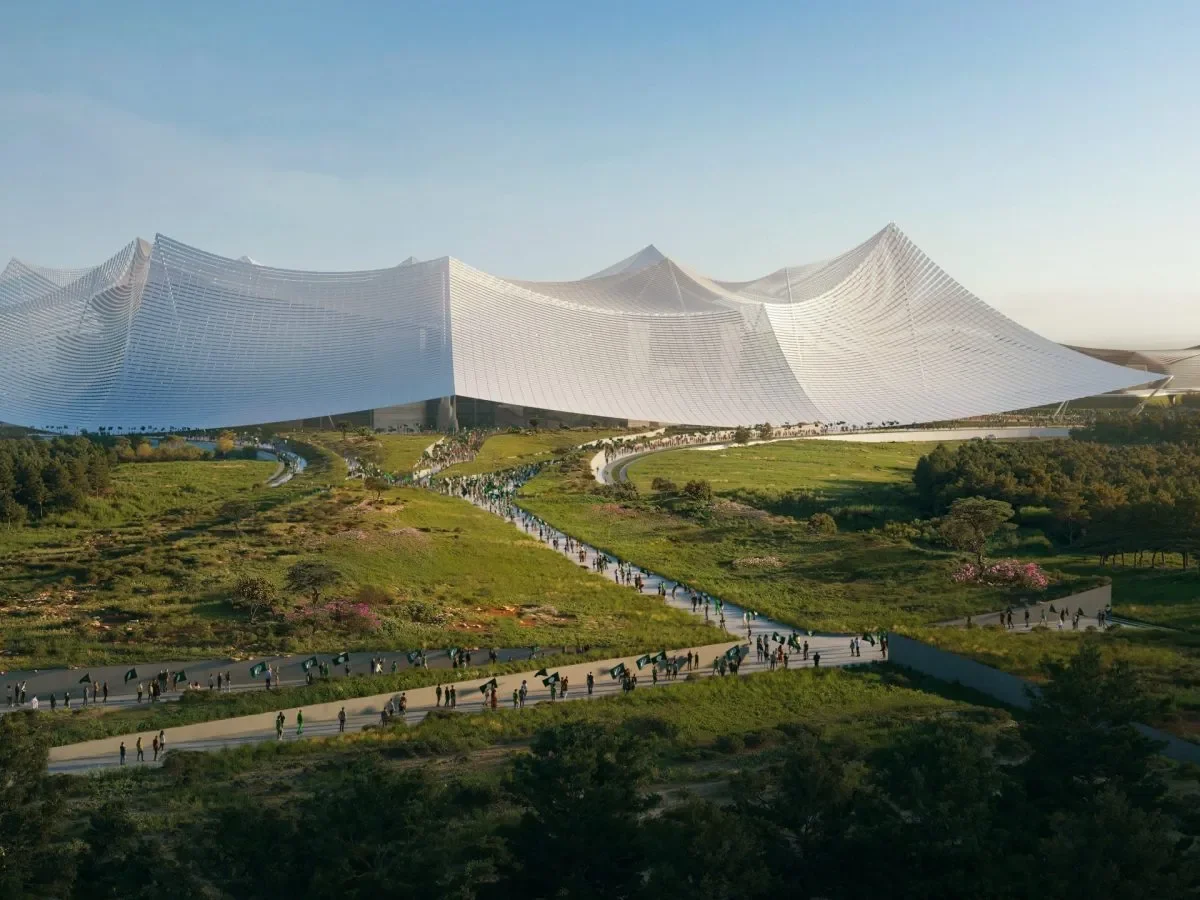
Image by Populous
Morocco has put the interior fit-out of the Grand Stade Hassan II out to international tender, with two contracts worth a combined MAD 369.98 million ($39.5 million) covering the playing surface and the seating bowl Accoring to Morocco World News, . The award moves the 115,000-seat Benslimane venue out of its structural phase and into the work that converts a construction site into something that can be operated, sold and staffed.
Both tenders were issued by the National Agency for Public Facilities (ANEP), which is running the project as delegated manager on behalf of SONARGES, the state sports facilities operator.
The smaller contract, at roughly MAD 92.5 million ($9.9 million), covers a hybrid pitch: natural grass reinforced with synthetic fibres to survive elite match loads. It also takes in underground ventilation and drainage, mobile LED grow lights and a sensor-driven irrigation system monitoring temperature, humidity and soil salinity. The winning bidder builds the surface in 14 months, then maintains it for a further 24 months after provisional handover.
The larger contract, at MAD 277.5 million ($29.9 million), covers seating across the bowl, including supporter, media, VIP and VVIP sections, press workstations and camera platforms, all subject to installation and numbering standards. Same 14-month window, with financial penalties written in for late delivery.
Both contracts carry local content conditions. Contractors must prioritise Moroccan-made materials where available, and up to 20% of the workforce has to be drawn from communities around the site.
The tenders land days after ANEP opened bidding on the stadium's seventh package, MAD 2.68 billion ($273 million) of external works covering access roads, public squares, utility corridors and fibre. The main structural contract, worth around MAD 3.2 billion, went to a joint venture of SGTM and TGCC. Project director Yassir Soussi told Reuters in May that crews were running three shifts a day, with the venue about 30% complete nine months into active construction and delivery targeted for December 2027. The wider complex is expected to cost close to $1 billion.
The pitch and seating tenders are the useful ones to read, because contractors do not order 115,000 seats for a bowl that is not ready to receive them. Morocco is buying interiors, which is the phase where stadium projects either arrive on time or start slipping in public.
That matters because FIFA has still not allocated the 2030 World Cup final. Casablanca is competing against the Santiago Bernabéu and a rebuilt Camp Nou, both of which already exist and both of which are backed by a Spanish federation lobbying hard to keep the match at home. Morocco's counter-argument is a greenfield site sized for FIFA's operational demands, and the only evidence that argument can rest on is delivery. Every tender that closes on schedule is part of the case.
The local content clauses are the more interesting detail for the rest of the continent. Africa's recent stadium boom has largely been financed and built by foreign contractors, most visibly Chinese state-linked firms in Senegal, Côte d'Ivoire and Cameroon, with the capital, the labour and the technical skill all imported and very little of it staying behind. Morocco is self-financing this one and legislating a floor on domestic participation. Whether 20% is meaningful depends on which jobs those are, but the principle is being written into the contract rather than promised in a press release.
Historically, African stadiums do not usually fail at construction, but they fail at year three, when nobody has budgeted for upkeep and a venue built to international standard slides below it. Bundling maintenance into the build contract is cheap insurance against the most predictable problem this venue will face.
Source: Morocco World News
