
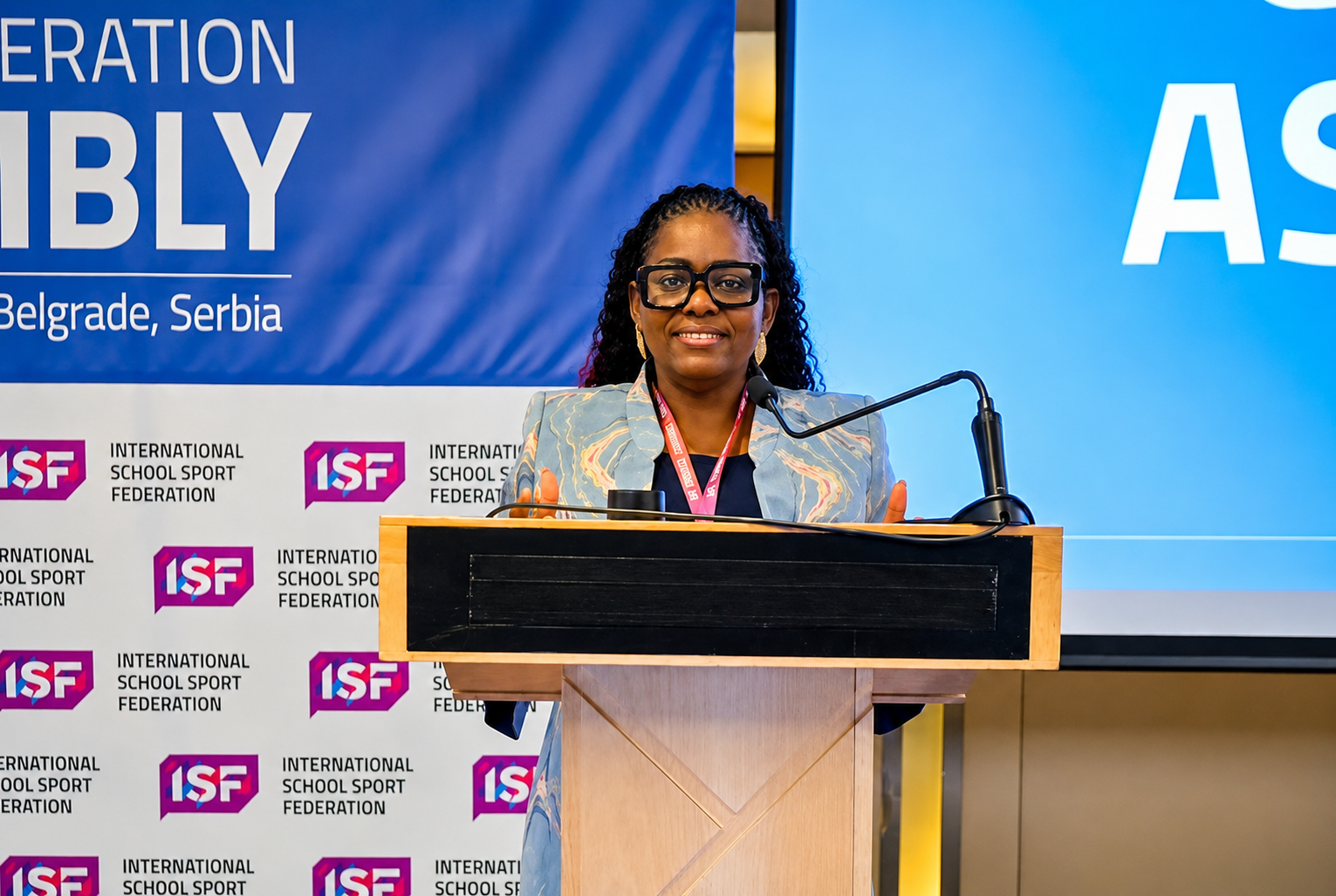
Olabisi Johnson | Image by Voice of Nigeria
Olabisi Temitope Joseph, president of the Nigeria School Sport Federation (NSSF), has been elected Continental President for Africa of the International School Sport Federation (ISF), becoming the first woman to hold the position.
Joseph was elected on July 21 at the 2026 ISF General Assembly in Belgrade, Serbia, an assembly the NSSF said drew delegates from 82 countries, with 79 votes cast. The federation described her election as a historic first for Nigeria and for women in ISF's continental leadership.
Her rise has been steady rather than sudden. Joseph has led the NSSF since 2020 and was returned unopposed for a second term at the federation's 2024 general assembly in Lagos. Since 2023 she had served as Third Vice-President on the executive committee of the Africa School Sport Federation, and has sat as an assessor on the ISF Executive Committee. A positioning that made her a credible continental candidate well before the Belgrade vote.
The election came as ISF reset its own leadership for the 2026 -2030 cycle. Serbia's Zeljko Tanaskovic was elected ISF global president, with an executive committee of 22 members spanning the federation's continental blocs.
In a statement, the NSSF congratulated Joseph and pledged its backing.
"The executives, state coordinators and staff of the Nigeria School Sport Federation pledge our full support as she takes on this continental responsibility to advance school sports for African children,"
Secretary-General Oba Funsho Usman said.
School sport rarely registers as a business story, but it is the front end of the athlete-development pipeline that federations, kit brands and broadcasters eventually monetise - and governance is where the leverage sits. A continental presidency gives Nigeria a direct seat in deciding which countries host ISF events such as the Gymnasiade, how development funding is routed across the continent, and which markets get visibility on the global school-sport calendar. A soft power with commercial downstream: hosting rights, sponsor activations and the early identification of talent that goes into national and professional systems.
Nigeria already has a template for what a monetised school-sport property looks like. The NSSF's flagship Milo National Secondary School Championships, backed by Nestlé, shows how a corporate sponsor anchors a national grassroots competition. The kind of model Joseph is now positioned to encourage across other African federations. African markets short on structured, sponsor-ready youth properties, a Nigerian voice at the top of the continental body is a channel worth watching.
The first woman to lead ISF Africa and it comes at a moment when the continent is trying to convert youth-sport participation into a genuine economic pipeline.
