How Africa's Sports Workforce Is Being Built in Dakar
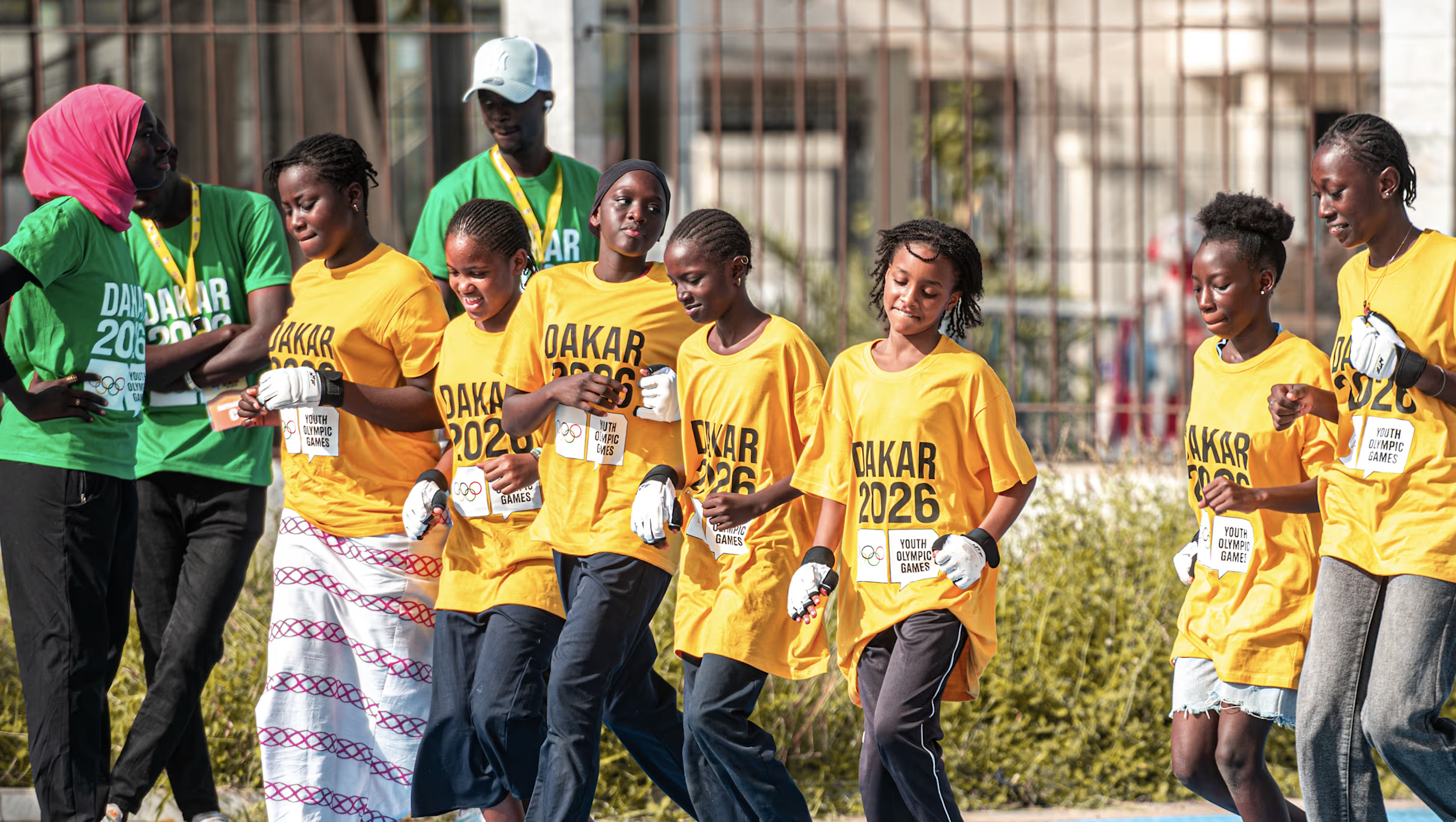
Image by KHALILUS via IOC
The Dakar 2026 Learning Academy is training the next generation of African sports administrators. But its most ambitious goal isn't delivering a Youth Olympics - it's what happens after the closing ceremony.
When Nanaissa Ben Aya graduated from the first cohort of the Dakar 2026 Learning Academy in the spring of 2025, she walked straight into one of the most consequential jobs in African sport. The 22-year-old architectural engineering student - one of 40 graduates from the programme's inaugural intake - now serves as Dakar 2026's NOC Relations Manager for Europe, coordinating the participation of an entire continent's Olympic committees in the first Games ever hosted on African soil.
"I think the Learning Academy is a great initiative because no one understands a country better than the locals," Ben Aya said. "If you want to organise something successfully, you're going to have to have tailored solutions."
It is exactly the kind of story the Dakar 2026 Organising Committee was built to tell. Launched in May 2025 and backed by Olympic Solidarity and the Association of National Olympic Committees of Africa (ANOCA), the Learning Academy is a professional training programme targeting recent graduates, government employees, and young staff from sports organisations - including National Olympic Committee personnel - across Senegal and the wider continent. Participants receive comprehensive instruction from Dakar 2026 and IOC experts in Games planning, sports and event operations, and functional area management. The goal, by the time the Youth Olympic Games opens in 2026, is for more than half the entire Organising Committee workforce to be Learning Academy alumni.
That is an ambitious target by any measure. But the programme's architects have set their sights well beyond the Games themselves.
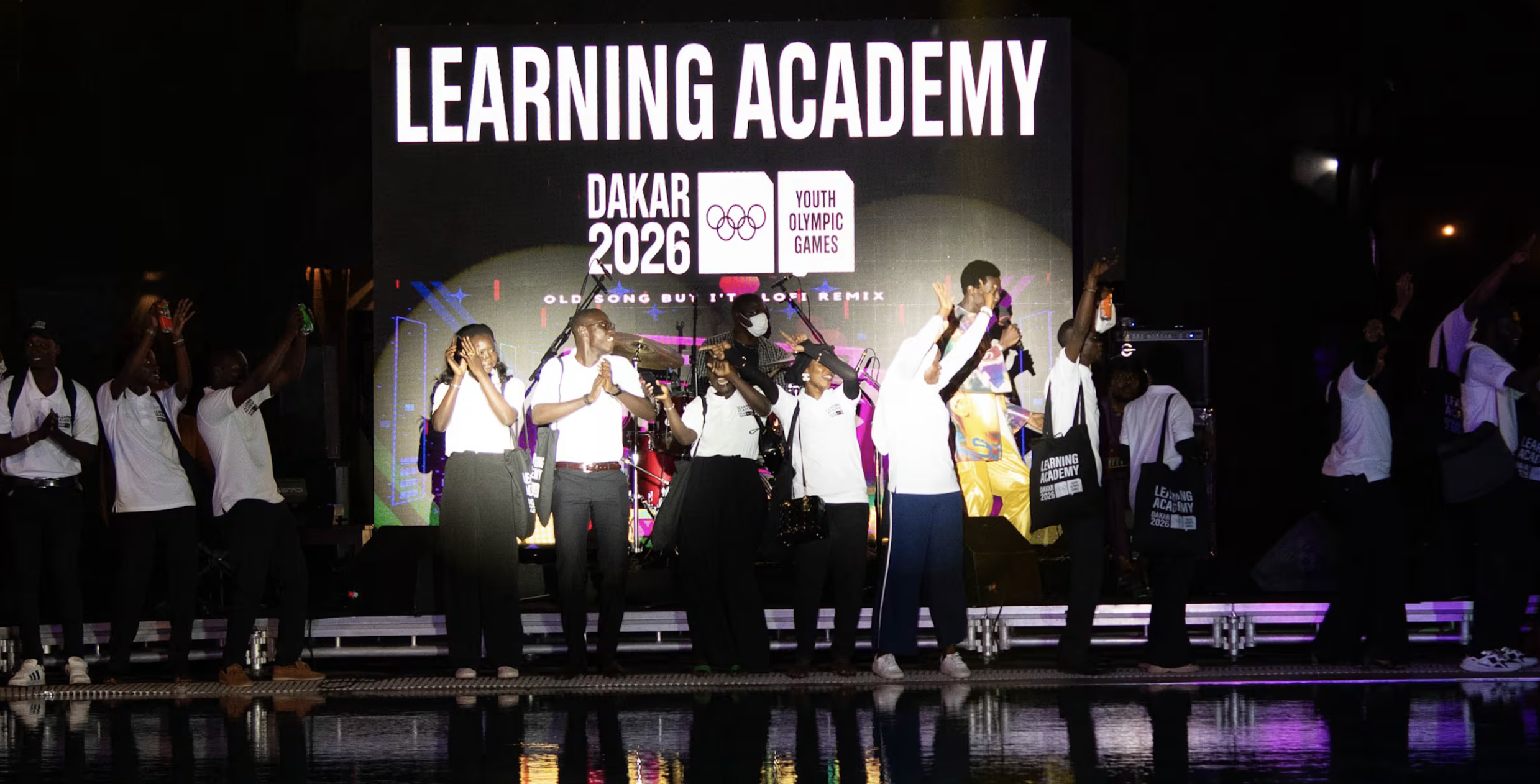
Image Courtesy of Dakar 2026 Organising Committee via IOC
Beyond Senegal
What makes the Learning Academy structurally significant — and commercially interesting, is its pan-African reach. Cohorts five and six of the nine-cohort programme were reserved exclusively for young professionals from other African nations. In October 2025, every African NOC was invited to nominate one male and one female candidate to join the Organising Committee through the Academy. Graduates selected by 22 African NOCs were expected to take up their placements in January and April 2026.
The intent is deliberate: that the expertise accumulated in Dakar - in logistics, event management, media operations, athlete services, and venue management - flows outward to sports organisations from Cairo to Cape Town long after the Olympic flame is extinguished.
"Giving this opportunity to young professionals is very good, knowing that Africa has a very young population and we are growing in terms of global events, especially sports," Ben Aya added.
Africa's demographic reality makes this argument even more compelling. The continent is home to the world's youngest population, with a median age of around 19. Its sports industry is nascent relative to its size, consistently hampered not by a lack of talent or passion but by a shortage of trained administrators, event professionals, and sports business operators. The Learning Academy, by design, begins to fill that gap - using the gravitational pull of a global sporting event to create a structured talent pipeline that the continent has never had before.
Leo Moreau, Head of NOC Relations and Services at Dakar 2026, framed the broader ambition plainly:
"It's a very ambitious programme, with an aim to leaving a strong and powerful legacy for local use in the workforce, especially in sports and big events."
The model, he noted, has already attracted interest from the organisers of the LA 2028 Olympic Games - a striking early validation that what is being built in Dakar has relevance far beyond West Africa.
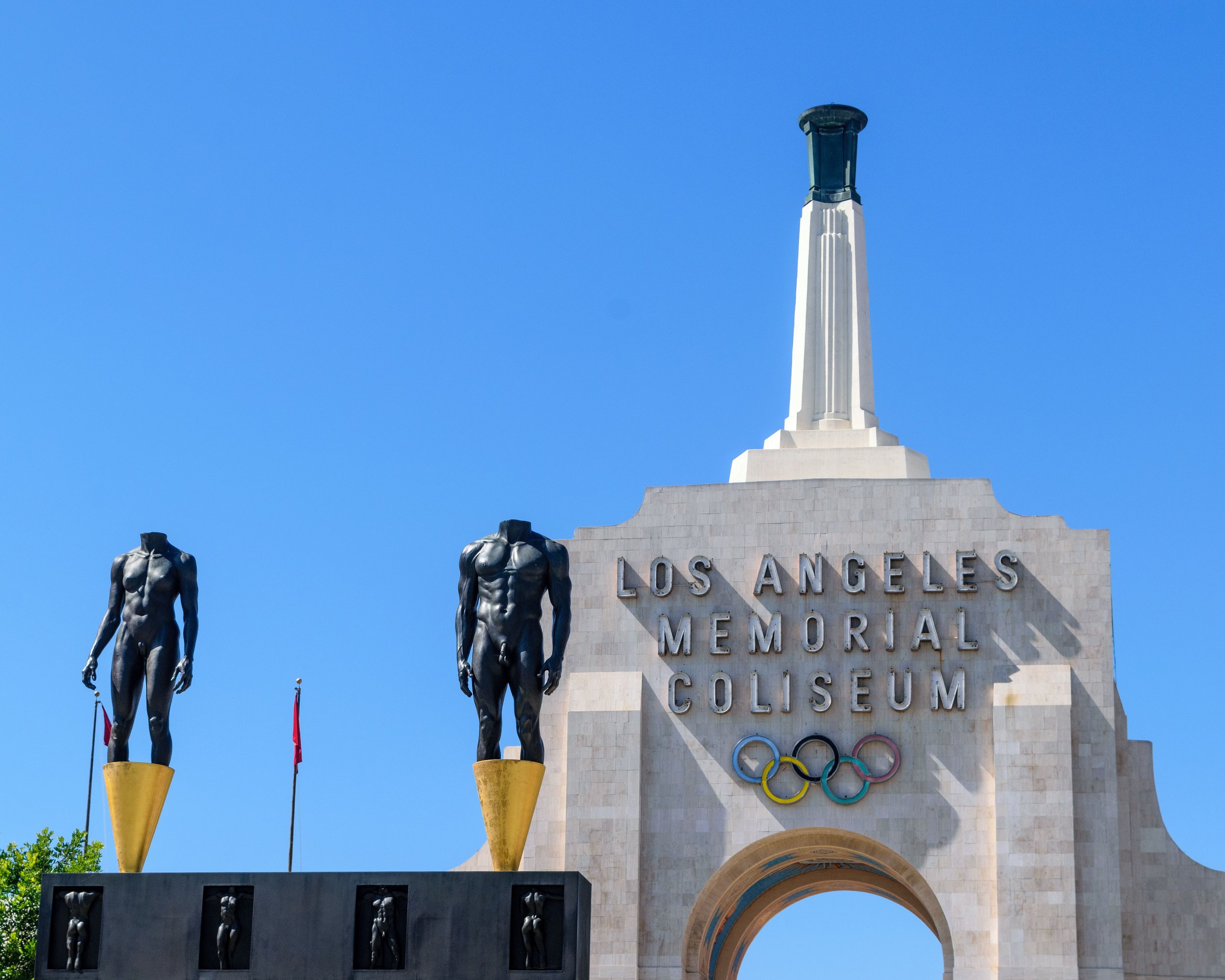
Los Angeles Memorial Coliseum, California, USA / Image by Thomas Parker
The Business Case for Investment
For Africa's sports business community, the Learning Academy is more than a feel-good legacy story. It is a data point in a larger argument about the continent's readiness to attract and host major international events - and the commercial opportunities that come with them.
The 2025 Olympic Solidarity Annual Report revealed that African NOCs are already among the most active users of global sports development programmes. The continent led all regions in coach training courses (77 courses across 39 NOCs), in Olympic Scholarships for Coaches (111 courses across 41 NOCs), and in Athlete Career Transition participation (26 NOCs - more than any other continent). African NOCs also received the most Team Support Grants of any continent in 2025, with 45 teams across 31 countries backed by Olympic Solidarity funding. These numbers are of a continent that is investing heavily in building the structures to compete - and increasingly, to organise.
The Dakar 2026 NOC Open Days, held November 5–7, 2025, reinforced this. Forty-two NOCs attended the first-of-its-kind pre-Games event, touring the three host sites of Dakar, Diamniadio, and Saly. The Organising Committee's willingness to invite international scrutiny early was itself a statement of institutional confidence - a confidence that the Learning Academy is actively building into the workforce that will deliver the Games.
The Governance Dividend
There is a governance dimension to this story that matters for sponsors, broadcasters, and development finance institutions evaluating Africa as a sports market. The IOC's Basic Universal Principles of Good Governance - updated in 2022 - are increasingly the baseline expectation for NOCs seeking access to Olympic Solidarity funding. Globally, the proportion of NOCs with at least 30% women on their executive boards rose from 35% in 2021 to 43% in 2025. The Learning Academy's gender parity requirement - one male and one female nominee per African NOC - is also quietly embedding the same principle into the next generation of African sports administrators.
For private sponsors and rights holders, governance quality is a due diligence issue. The continent's growing alignment with international governance standards, accelerated by Dakar 2026's institutional demands, reduces the risk profile of African sports partnerships and opens doors to investment that might previously have been withheld.
What Comes Next
The Learning Academy is, by design, a beginning. Nine cohorts, more than 400 graduates, and a deliberate effort to distribute that expertise across the continent represent a foundation - not a finished structure. Africa's major sporting events calendar is expanding. The continent is bidding for and winning more international competitions. Its football leagues, athletics federations, and Olympic committees are under growing pressure to professionalise at pace. The pipeline of trained administrators that Dakar 2026 is building arrives at precisely the moment the continent needs it most.
"We see people that want to serve their countries, they want to serve their continent," Moreau said of the Learning Academy graduates. "They feel that they are part of something bigger. It's truly Olympism in action."
The story of Dakar 2026 was never just about whether Senegal can host a Youth Olympics, for Africa's sports industry, it was always about whether the continent could use that moment to permanently raise its own capacity. On the evidence of 2025, the answer is taking shape.
Source: Olympic Solidarity and NOC Services Annual Report 2025
