Image by Populous
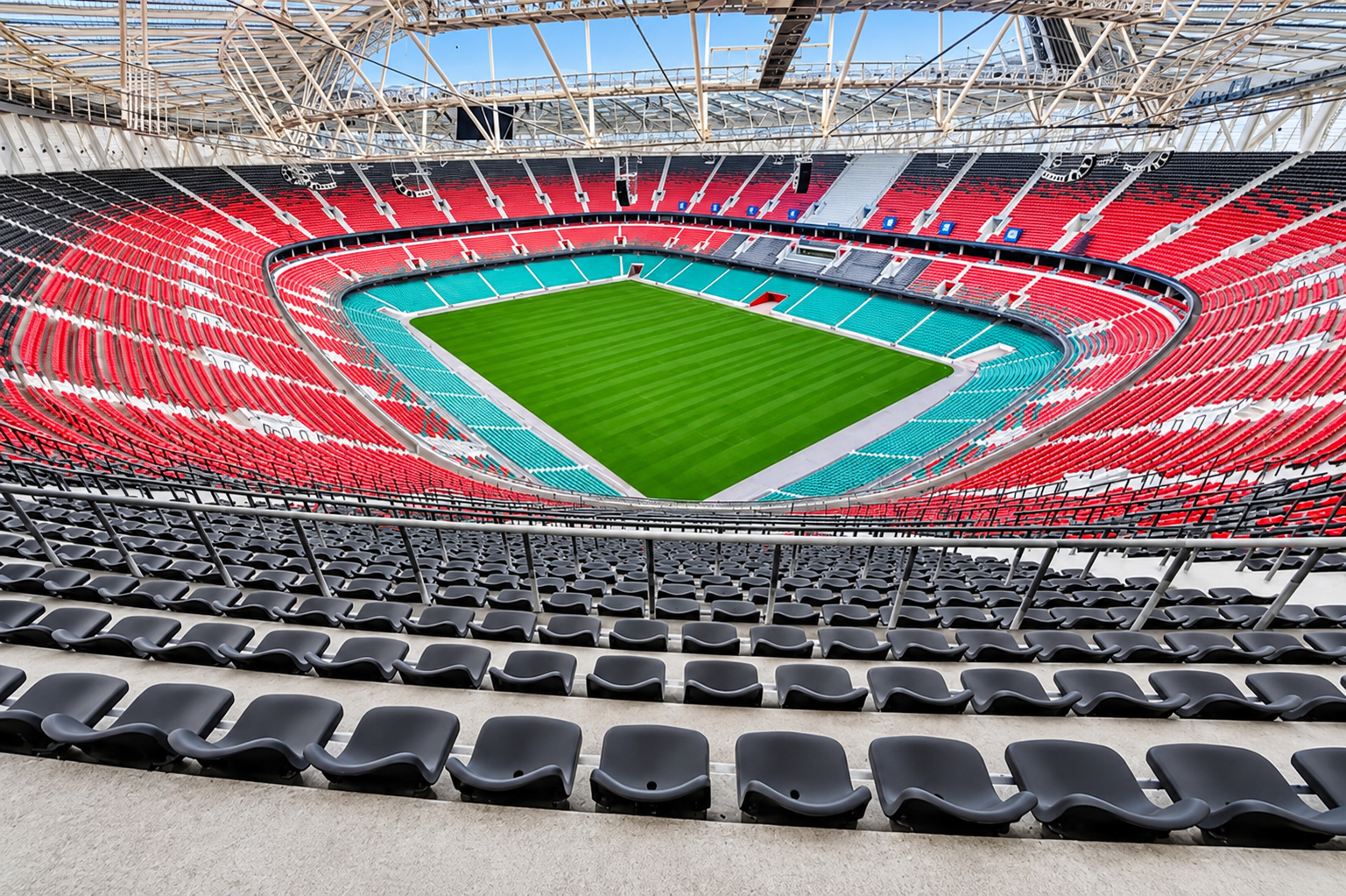
Otis Worldwide Corporation has been selected to supply and install 125 vertical-mobility units at the Grand Stade Hassan II, the 115,000-capacity stadium Morocco is building near Casablanca as its flagship venue for the 2030 FIFA World Cup. The New York-listed manufacturer announced the contract on November 11, shortly before FIFA’s inspection of Morocco’s candidate stadiums.
The order covers 73 Gen2 elevator systems, 42 Link escalator systems, four heavy-duty moving walks for high-traffic areas and six freight lifts. Together they will move visitors, staff, athletes and VIP guests around the venue during sporting and entertainment events.
Abdelhak Hakki, Managing Director of Otis Morocco, called the project “an important milestone” that reflects the “trust our customers place in our expertise, our people and our ability to deliver complex projects.” He said the company was proud to contribute to a development that will become “a national landmark” and play “a key role in Morocco’s future as a host of major international sporting events.”
Otis equipment in Moroccan Stadiums, Airports and Transport Hubs
Otis equipment already operates in Moroccan stadiums, airports and transport hubs in cities including Rabat, Casablanca, Marrakech, Tangier and Fez.
The stadium is in the El Mansouria commune of Benslimane province, approximately 38 kilometres north of Casablanca. It is owned by the Ministry of National Education, Preschool and Sports and operated by SONARGES, which presents it as the centrepiece of a planned 100-hectare complex. The complex will also include a 25,000-seat athletics stadium, an Olympic swimming pool, a convention centre and a hotel. Populous designed the stadium with Moroccan practice Oualalou + Choi. With a gross capacity of 115,000 and a net capacity of 108,800, it is expected to be the largest football stadium in Europe, the Middle East and Africa.
Royal Moroccan Football Federation (FRMF) President Fouzi Lekjaa has said the stadium will be ready in early 2028, and SONARGES also lists 2028 as the inauguration year. An earlier government timeline had set December 2027. In May, Reuters reported that project officials put construction at approximately 30% complete.
Costs have risen as construction has progressed
The government originally announced an investment budget of MAD 5 billion (approximately $505 million). By September, contracts awarded or launched for the project totalled approximately MAD 13.6 billion (approximately $1.37 billion). That figure adds up procurement activity and is not a certified final cost. A tender for the stadium’s seating, estimated at MAD 277.5 million (approximately $28 million), closed on November 13, and no award has been confirmed.
Morocco is co-hosting the 2030 World Cup with Spain and Portugal. Its bid proposes the Grand Stade Hassan II for either the opening match or the final, alongside Madrid’s Santiago Bernabéu and Barcelona’s Camp Nou. FIFA confirmed on October 27 that it would inspect candidate host cities and stadiums in November and December, and the delegation is expected in Morocco in late November. FIFA has said match allocations will be fixed only after host cities are confirmed.
The company’s business depends heavily on maintenance, and it maintains approximately 2.4 million customer units worldwide. A state-owned stadium with 125 units, built to be used long after 2030, could be a service account for decades. It also gives Otis a high-profile reference project to show other stadium owners.
In mid-2026, Morocco launched a separate MAD 126.3 million (approximately $12.8 million) tender for the stadium’s elevators and escalators. Neither Otis nor the authorities have said whether the Otis award is that lot or what the final price was.