Nike Opens First East Africa Flagship in Nairobi, Kenya
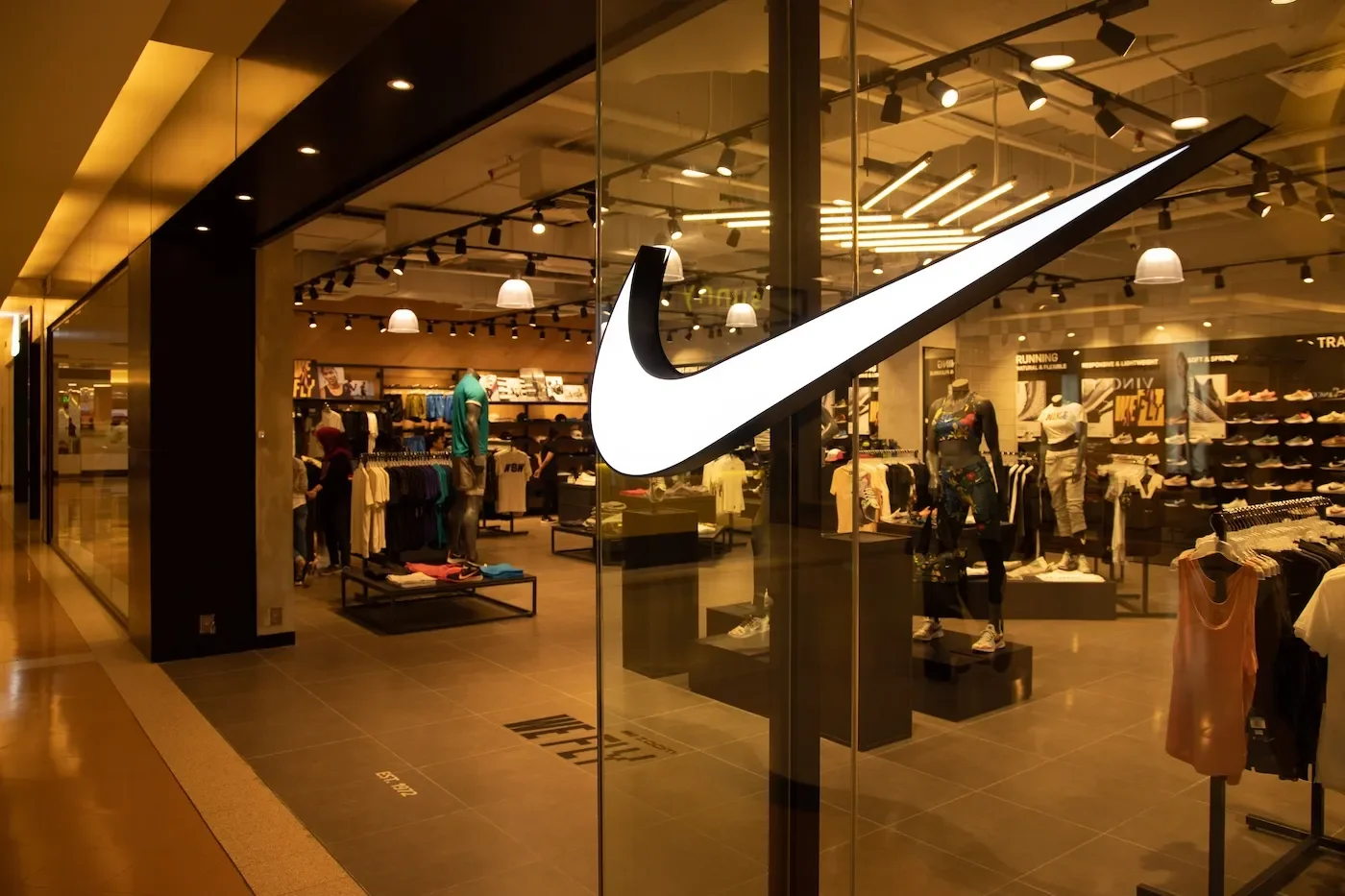
Image by Getty Images
American sportswear giant has opened its first flagship store in East Africa, setting up at Sarit Centre in Nairobi's Westlands district. The launch event drew Athletics Kenya President Lt-Gen (Rtd) Jackson Tuwei and Team Kenya First Deputy President Barnaba Korir alongside the marathon icon whose sub-two-hour barrier-breaking run became one of Nike's most high-profile global marketing moments.
The opening marks a significant shift in Nike's Africa strategy - from sponsorship and athlete deals operated at a distance, to a permanent commercial and cultural presence on the ground.
The business case is clear. Nairobi has spent the last decade positioning itself as a magnet for global consumer brands, and Nike is the latest to take the bet. East Africa's expanding urban middle class, young demographics, and deepening fitness culture have made the Kenyan capital increasingly difficult for multinationals to ignore. Nike has long leveraged Kenyan athletics to sell product worldwide, establishing a physical footprint in the country closes a long-standing gap between brand affinity and commercial infrastructure.
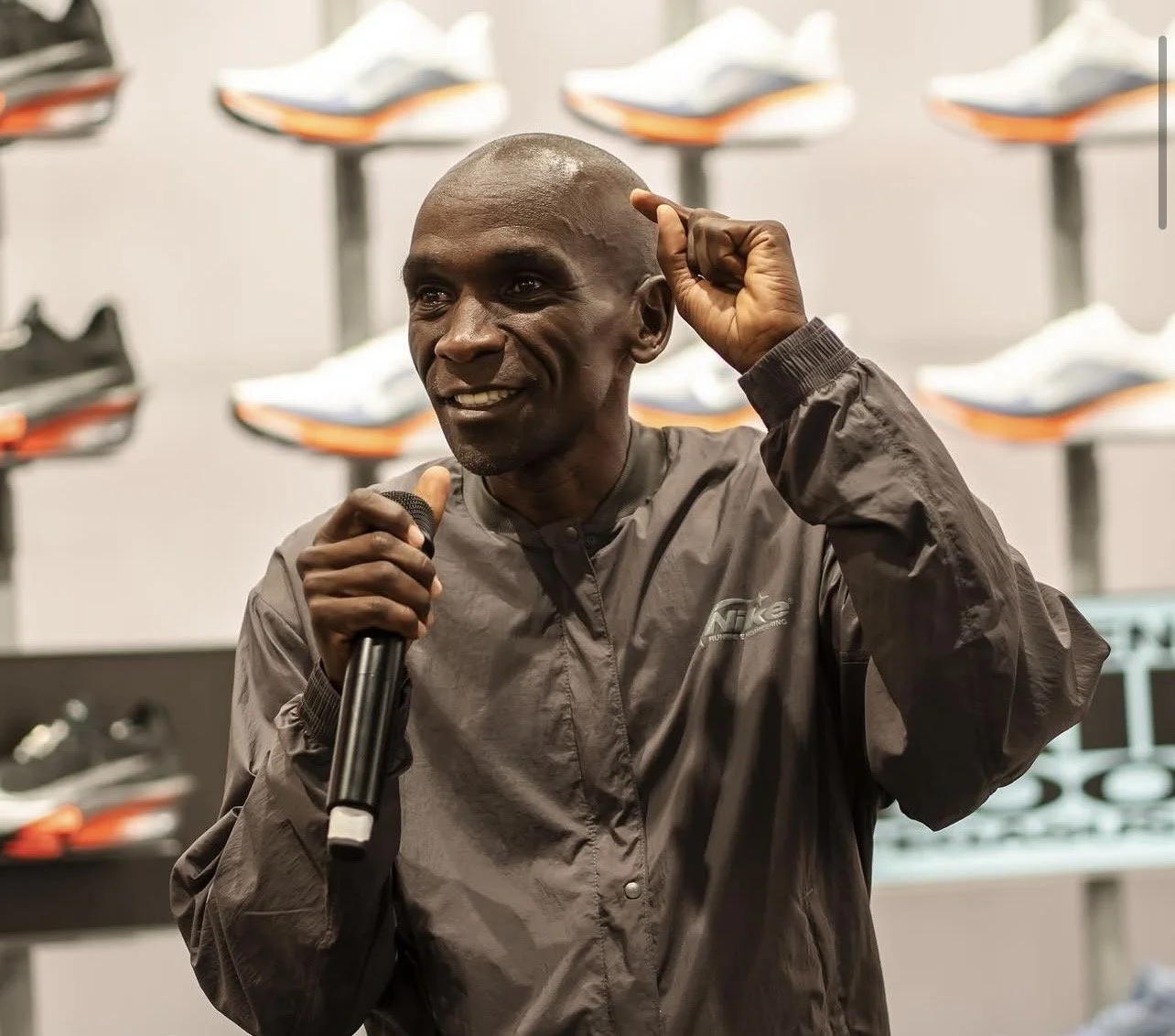
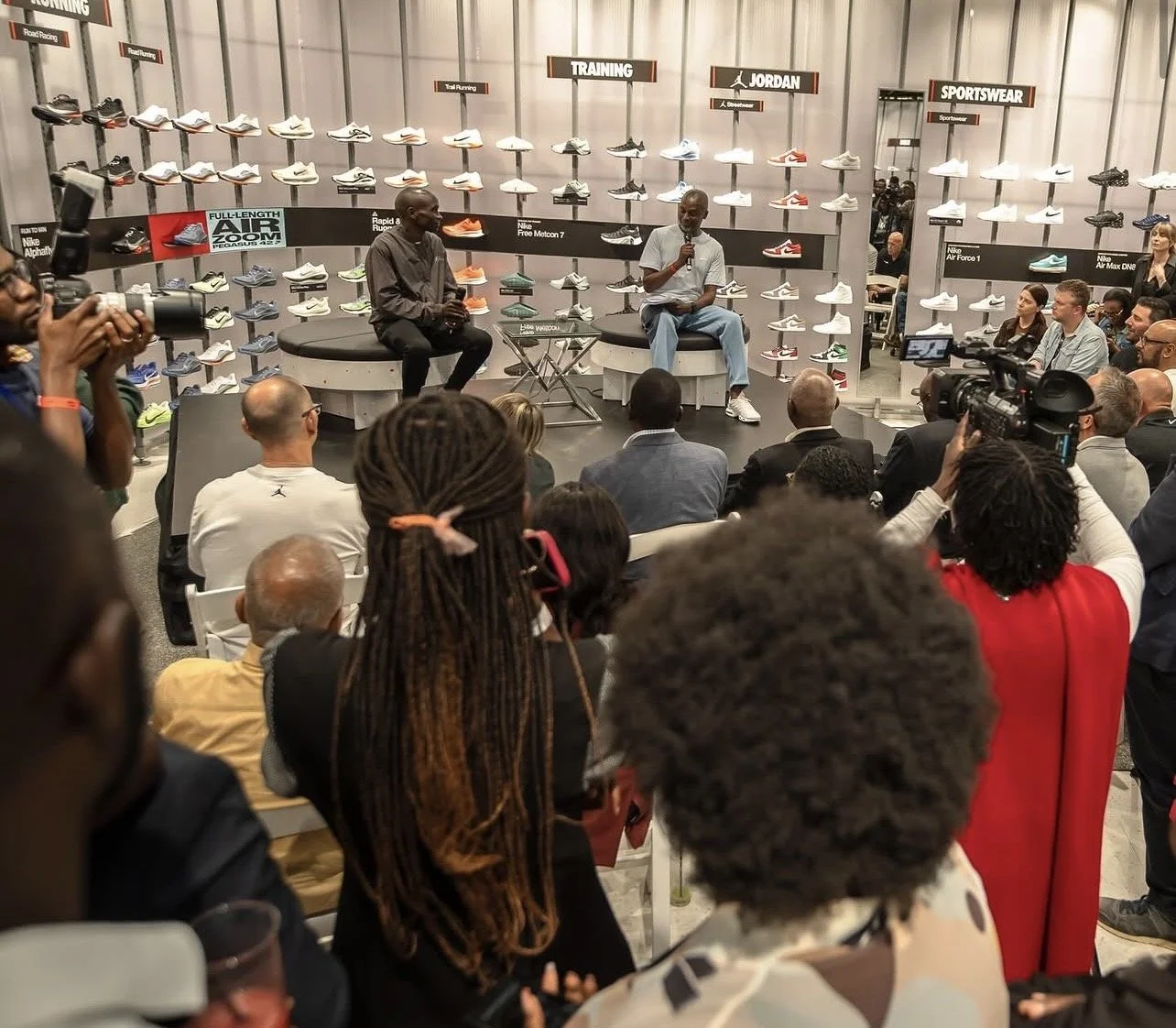
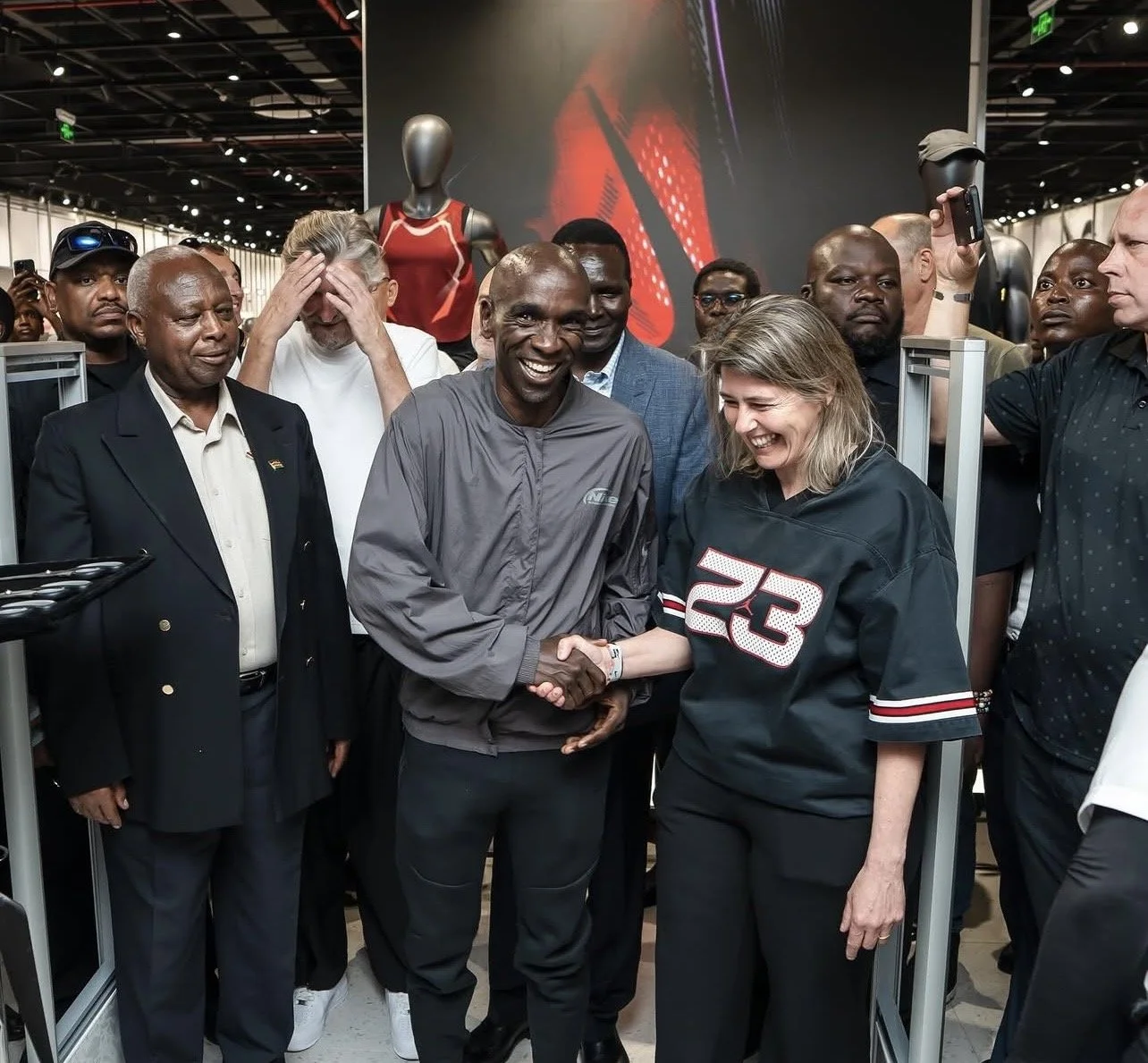

Image Courtesy | Eliud Kipchoge
The Nairobi store brings Nike's Africa retail footprint to 41 locations across the continent, according to the company's website - with 18 stores in Egypt, 14 in South Africa, four in Morocco, three in Algeria, and one each in Nigeria and now Kenya. The distribution tells its own story: East Africa, despite producing some of the world's most marketable athletic talent, has until now been absent from Nike's brick-and-mortar map entirely.
According to multiple reports, the flagship is expected to carry performance footwear, running apparel, training gear, lifestyle collections, and limited-edition releases - a full-spectrum offering designed to mirror the experience of Nike stores in London, New York, or Tokyo. The brand is expected to use the space for athlete appearances, community running events, and youth initiatives, positioning the store as a cultural hub as much as a retail outlet.
There's also a market integrity dimension. Africa’s sports merchandise market, including Kenya's, has long been plagued by counterfeits, and a direct-to-consumer Nike presence gives buyers access to authenticated product and official releases that previously required overseas sourcing or navigating unreliable third-party channels.
The symbolism, though, is hard to separate from the substance. Kenya has supplied global sport with some of its greatest athletes for decades, and the brands that profited most from that talent have largely done so without a meaningful on-the-ground commercial investment in return. Nike's Nairobi flagship - however commercially motivated - lands as a statement of recognition, and that matters in a market where brand trust is built as much on respect as on product quality.
The store's arrival raises a more interesting question: whether Nike's move will catalyse further investment from other global sports and lifestyle brands still watching from the sidelines. If Nairobi can anchor Nike's East Africa growth, it may not be long before the city becomes the regional headquarters for an entirely different tier of sports commerce. As Kenyan athletes continue to perform on the track, the commercial infrastructure is starting to catch up.