Ghana’s President Strips National Sports Authority of Its Board
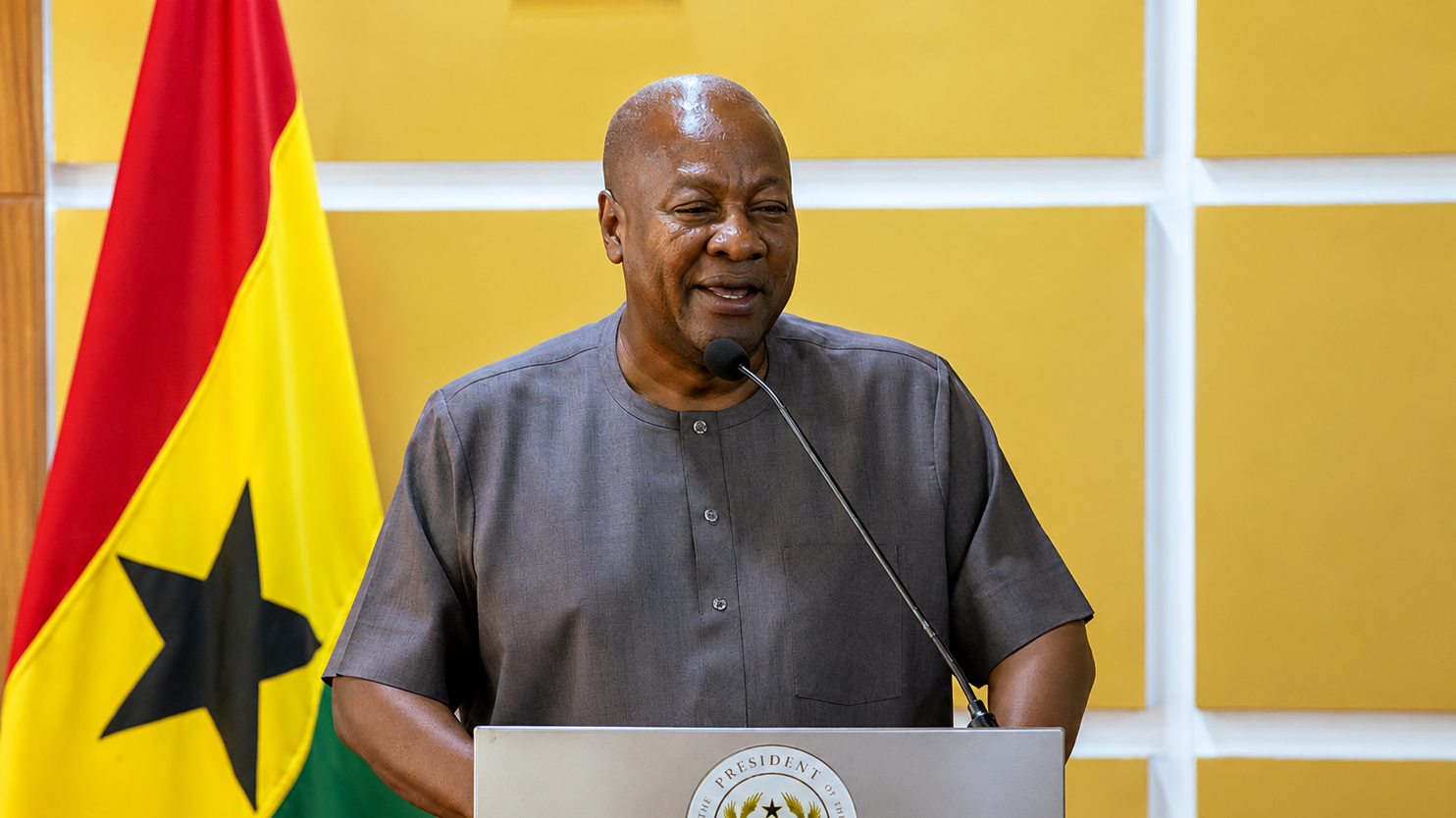
President John Dramani Mahama of Ghana | Image by Presidency Republic of Ghana
Mahama has dissolved the Governing Board of Ghana's National Sports Authority with immediate effect, folding the country's top sports oversight body into a broader purge of nine state institution boards spanning petroleum, banking, mining and infrastructure.
The move strips the NSA of governance just as scrutiny over the state of its flagship venues, including the Accra Sports Stadium, has intensified.
Management teams keep running day-to-day operations
The Presidency mentioned this as procedural rather than punitive: the dissolution does not permanently remove the governing structures, and new boards are expected to be reconstituted in due course. In the meantime, management teams keep running day-to-day operations, but with a hard stop on anything requiring board sign off. They have been instructed not to take major policy, financial or contractual decisions without prior authorisation from the appropriate authority, a restriction that effectively freezes any significant spending or contracting at the NSA until a new board is appointed.
The dissolved board was a 15 member group chaired by Dr Fred Awaah, drawing representatives from the NSA itself, the National Sports College, the Ministries of Sports and Recreation, Finance and Education, and the Security Services Sports Association, alongside tertiary institutions, the National Paralympic Committee, the Ghana Olympic Committee and various sporting bodies. NSA Director-General Yaw Ampofo Ankrah also sat on the board. It had been inaugurated in December 2025 following Cabinet approval of nominees with a mandate to provide oversight and strategic direction for the Authority.
Awkward Timing
In August, Awaah described the condition of the Accra Sports Stadium as a potential safety hazard following an inspection, saying the structural issues were serious enough that the NSA, if it had the authority, would have opted to demolish and rebuild the facility rather than patch it. That warning came from the same board that has now been dissolved, leaving the question of who inherits it, and with what urgency, to whichever board Mahama appoints next.
For anyone tracking Ghana's sports infrastructure pipeline, the practical effect is a governance vacuum at precisely the point where decisions on stadium funding and facility management were becoming urgent. A board freeze does not stop the NSA's management from keeping the lights on, but it does stop anything requiring sign off, and stadium renovation or rebuild decisions are exactly the kind of major financial commitment that needs a board behind it. Investors or contractors with an interest in Ghana's venue upgrades now have to wait out a reconstitution process with no published timeline, on top of an authority that was already flagging its own facilities as unsafe. Whoever Mahama appoints to chair the next NSA board will be walking into a stadium safety question that has already been put on the record by their predecessor.