Nairobi Wins First African World Athletics Championships as Munich Locks In 2031
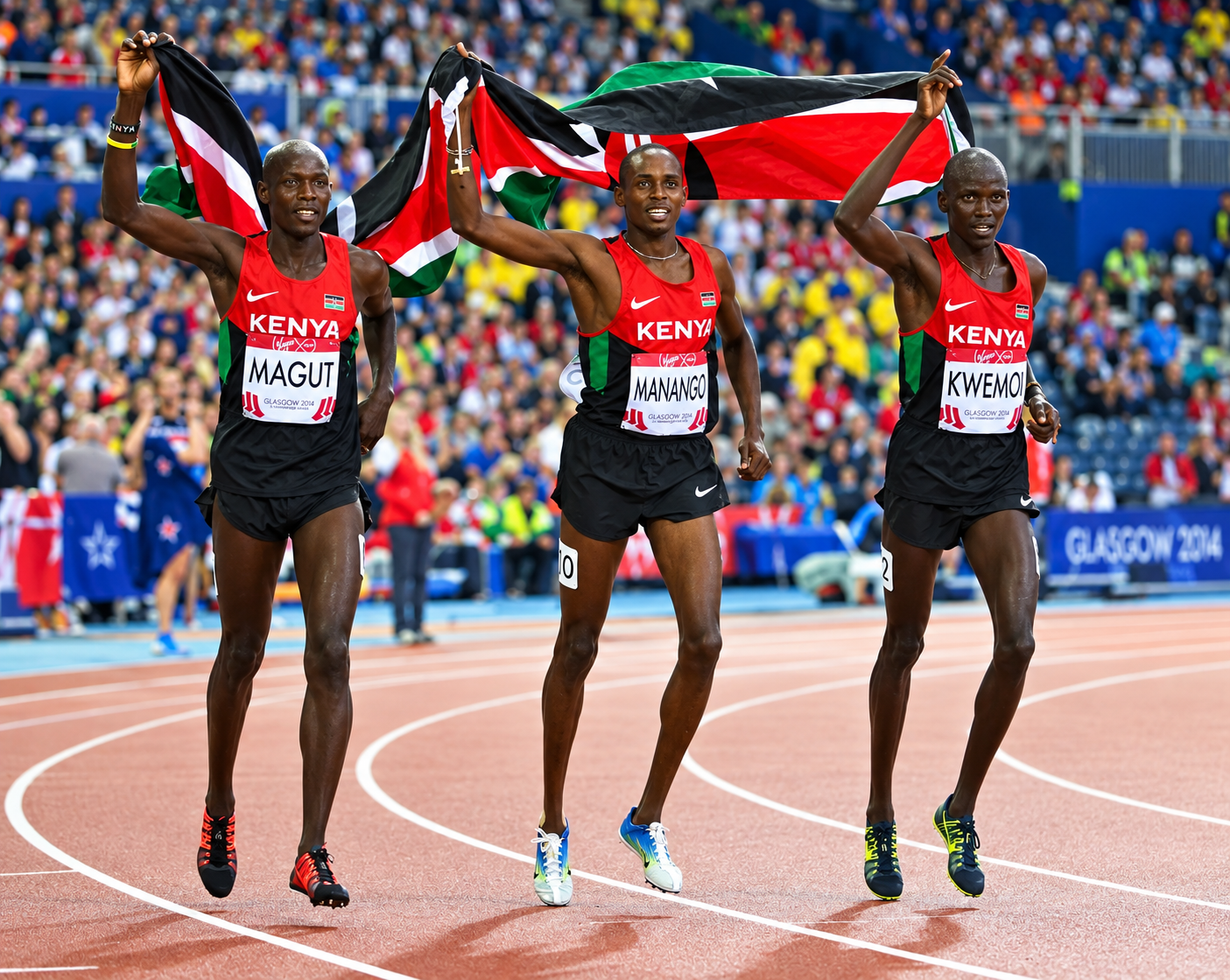
Image by Athletics Kenya
The World Athletics Championships are coming to Africa for the first time. The World Athletics Council named Nairobi host of the 2029 edition on Tuesday, choosing Kenya over rival bids from London and Rome, and awarded the 2031 Championships to Munich, whose bid had covered either year.
The Decision in Budapest
The decision came out of a two day council meeting in Budapest, Hungary, closing a contest that had run since April among four cities chasing two host slots. Sebastian Coe, the World Athletics president, framed it as recognition of where Kenya sits in the sport.
"The quality, ambition and commitment demonstrated by all four candidates underlines the strength and global appeal of the World Athletics Championships," Coe told Olympics.com, the IOC's news site.
“Nairobi presented a compelling and emotional bid, and taking the World Athletics Championships to Africa for the first time will be historic.”
Kenya's Hosting History

Image by Elegance Nairobi
Kenya arrives at 2029 as the second most successful nation in championship history, and not as a first time host. Mombasa staged the World Cross Country Championships in 2007, and Nairobi has twice run age group global events: the World Youth Championships in 2017 and the World U20 Championships in 2021. The 2029 edition will use the Kasarani stadium, known commercially as Safaricom Stadium under an existing naming rights deal, which World Athletics lists at a renovated capacity of 48,000.
"We accept this honour and want to promise the global community that Kenya will continue to be a home of champions in matters of athletics," said Salim Mvurya, Kenya's cabinet secretary for youth affairs, creative economy and sport. "The world will come to a country where running is more than a competition, it's our national story and where every generation believes that the next world champion can emerge from."
Germany's Return
Munich's award makes Germany a three time host, after Stuttgart in 1993 and Berlin in 2009. Ronald Rauhe, Germany's minister of state for sport, tied the bid to a domestic audience rather than the event itself. "For us, hosting such a major sporting event is far more than top level sport," said Rauhe. "We want to create an impact that reaches beyond the stadium. This World Championships are intended to encourage the young people to believe in their own potential."
Beijing hosts the Championships next year, before the rotation moves to Nairobi in 2029 and back to Europe for Munich in 2031.
Kasarani Stadium
The timing seems to be great for Kenya. Kasarani is already being revamped for the 2027 Africa Cup of Nations, which Kenya is co-hosting, so the government now gets a second, more lucrative return on a stadium bill it was paying anyway. That is a rare sequencing win: most cities carry the full cost of a bespoke build for one flagship event, while Nairobi spreads the same renovation across a football tournament and an athletics championships two years apart. It also puts real pressure on the delivery timeline, since the "renovated" capacity figure World Athletics is currently citing does not match the 60,000 seats other recent reporting has attached to the ongoing AFCON works, a gap that will need resolving well before ticketing opens.
What Budapest Cost
No Kenyan ministry or organising committee has put a figure on what 2029 is worth to the country, and this early after the vote, none may exist yet. The clearest benchmark comes from Budapest, the last host, in 2023. Hungary built a dedicated National Athletics Centre for around €550 million and separately budgeted roughly €81.8 million to run the nine day event itself, broadly in line with World Athletics' own guidance that an organising budget typically runs $70 million to $80 million. Ticket sales brought in the equivalent of only about €7.6 million against that spend, though 400,000 spectators from 120 countries passed through the turnstiles, the kind of visitor volume a host government counts on for hotel, restaurant and retail spending that never shows up in the event's own books. Kenya's version of that trade looks lighter on paper: Nairobi isn't building a stadium from scratch the way Budapest did, since the Kasarani renovation is already funded out of the AFCON 2027 budget, so the marginal cost of adding the 2029 Championships to Kenya's calendar sits closer to the organising budget alone than to Hungary's combined bill.
The Bigger Picture
World Athletics, sending its showcase event outside Europe, Asia and North America for the first time is a commercial hedge on distance running's biggest fan base rather than its biggest media market. Kenyan athletes already carry sponsorship weight for Nike, adidas, On and a string of European marathon majors; a home Championships gives those relationships a domestic stage and gives Kenyan broadcasters, hospitality operators and Safaricom's own sponsorship of the venue a multi-year commercial runway. It also arrives inside a broader run of continental hosting: Senegal stages the Dakar 2026 Youth Olympics next month, and Morocco co-hosts the 2030 World Cup with Spain and Portugal. Nairobi 2029 is the clearest sign that global federations are treating African hosting as a genuine revenue strategy, not a symbolic gesture.